If you’ve been wondering “why is my dog limping?”, you’re in good company- mobility concerns are one of the most common reasons owners contact their vets. But it’s not just dogs who struggle. Cats experience mobility problems too, although they’re far more discreet about it. Whether it’s a dog struggling to walk or a cat not jumping on furniture, both species give us early hints when something isn’t quite right.
A limp is never something to ignore. Most cases stem from discomfort in joints, muscles, ligaments, or bones. Even when a dog has a limp but no pain outwardly, they may simply be hiding it well. Likewise, cats often quietly adapt by reducing their activity instead of showing obvious limping.
Spotting early mobility changes
For dogs, clues can be obvious or subtle- dogs with stiff legs, a dog struggling to get up, a dog that can’t jump in car, or a dog that can’t get upstairs. These small changes are often the first signs of arthritis.
Cats, on the other hand, excel at pretending everything is fine. A cat not jumping on furniture anymore, avoiding high places, or hesitating before leaping can all indicate joint discomfort.
Both species deserve investigation as soon as changes appear.
Why “walking it off” doesn’t help
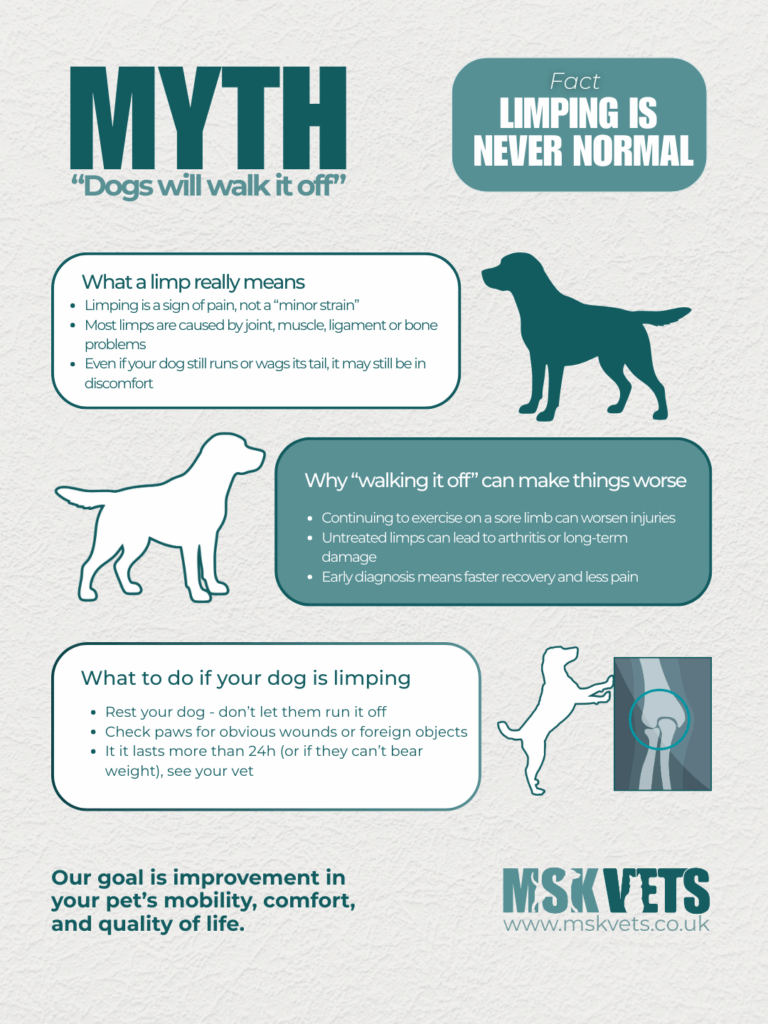
As our infographic says, the old myth that pets will “walk it off” can actually make things worse. Exercising on a sore limb risks further injury, and untreated limps can lead to arthritis or long-term mobility issues.
My dog has a limp — what should I do?
If you’re asking “my dog has a limp, what should I do?”, start with:
- Rest and controlled movement
- A paw check for injuries or foreign objects
- Veterinary evaluation if the limp persists beyond 24 hours or they won’t bear weight
The same applies to cats showing reduced jumping, changes in gait, or stiffness.
How MSK Vets can help
We support both dogs and cats with mobility issues, providing thorough assessment, diagnosis, and tailored treatment plans. Whether it’s a limping dog, a stiff senior, or a cat quietly avoiding their favourite perch, early intervention makes a world of difference.
Limping is never normal — and neither is struggling to move. If your pet seems uncomfortable, we’re here to help. Speak to your vet about a referral to us.